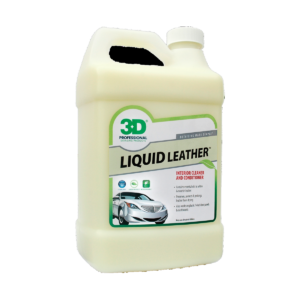
Almost all modern automotive “leather” is coated — a pigmented polyurethane layer over the hide — which changes everything about how it should be treated. You are cleaning and protecting a plastic film, not a skin.
That means a pH-neutral cleaner and a soft brush, not a saddle soap. It also means most “feeding” conditioners do nothing useful: the oil cannot reach the hide through the coating. What a good conditioner does is leave a UV-stable, non-greasy protective film that reduces abrasion on the wear points — driver’s bolster, steering wheel, armrest.
Genuine uncoated aniline leather exists, mostly in older and high-end cars, and does want a different product. If water soaks in rather than beading, you have aniline.
Leather
Almost all modern automotive “leather” is coated — a pigmented polyurethane layer over the hide — which changes everything about how it should be treated. You are cleaning and protecting a plastic film, not a skin.
That means a pH-neutral cleaner and a soft brush, not a saddle soap. It also means most “feeding” conditioners do nothing useful: the oil cannot reach the hide through the coating. What a good conditioner does is leave a UV-stable, non-greasy protective film that reduces abrasion on the wear points — driver’s bolster, steering wheel, armrest.
Genuine uncoated aniline leather exists, mostly in older and high-end cars, and does want a different product. If water soaks in rather than beading, you have aniline.